Turning Insights into Action
Autopilot is a banking intelligence product that helps teams understand customer behavior and uncover growth opportunities buried inside complex financial data.
This case study shows how I took Autopilot from interesting insights to real execution. I designed a single connected flow that turns opportunities into campaigns teams can launch and measure in minutes — not days. No spreadsheets. No handoffs. No lost context.
The result is a faster, clearer way for banks to move from data to decisions and from decisions to real impact.
How I shaped the direction
Lead UX Designer | Platform: Enterprise Web | Domain: Banking & Analytics
My responsibilities included:
Designed the end-to-end campaign experience from opportunity discovery and segmentation to execution and performance tracking turning insight into action inside one continuous flow.
Led cross-functional alignment with product, data science, and engineering to ensure the system stayed simple for users and rigorous under the hood.
Discover
From Insight to Action with Too Many Gaps in Between
While Autopilot V1 helped banks uncover valuable insights, marketing and strategy teams still struggled to act on them quickly. Launching a campaign meant exporting data, manually curating lists, and coordinating across tools a process filled with friction, duplication, and delay.
Even teams with automation tools like HubSpot or Salesforce found them disconnected from real banking data. The result: opportunities were spotted but rarely acted upon in time.
Our challenge was clear design a campaign experience that connected insight discovery to execution, all within Autopilot.
An End-to-End Campaign Experience
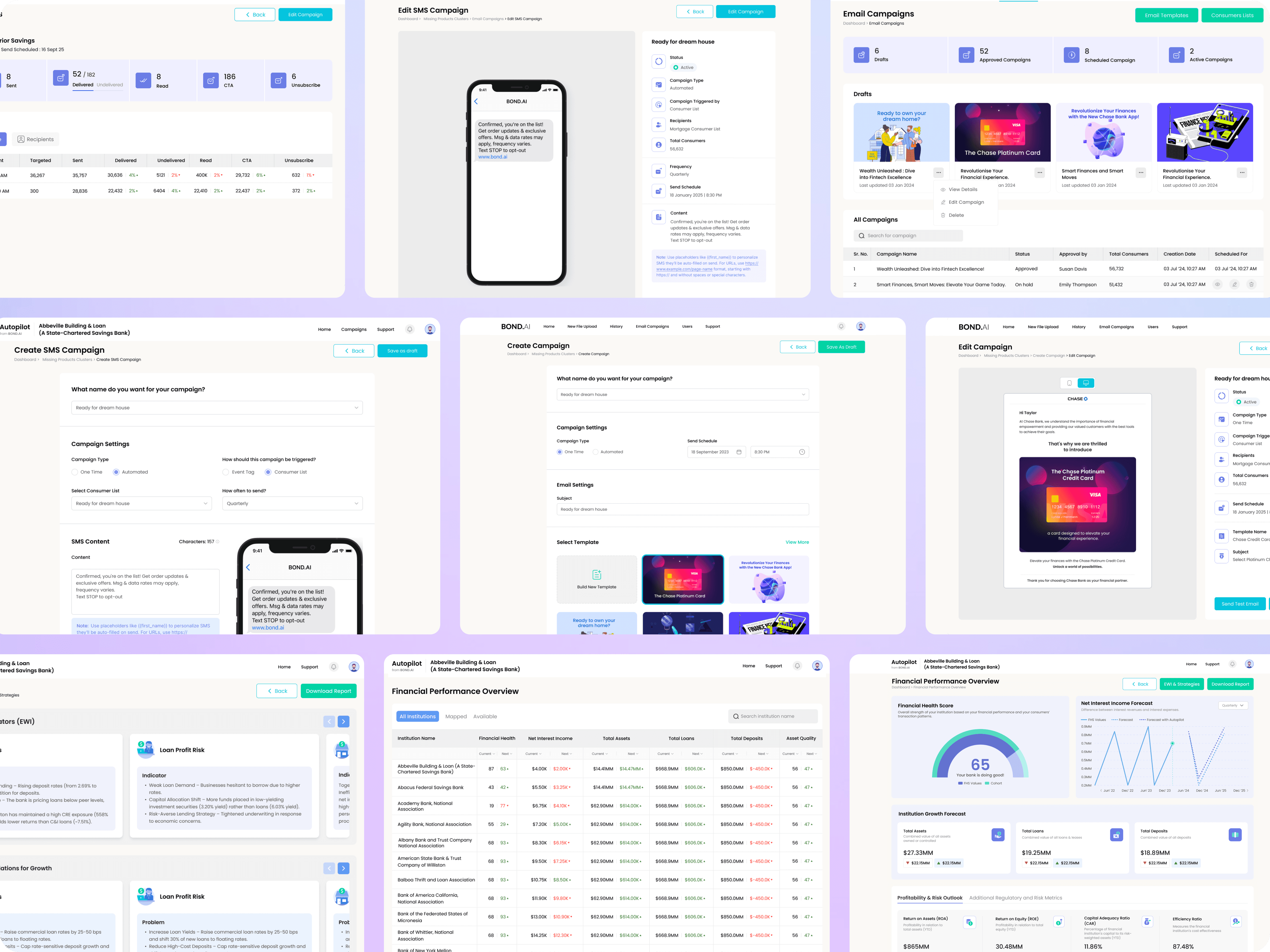
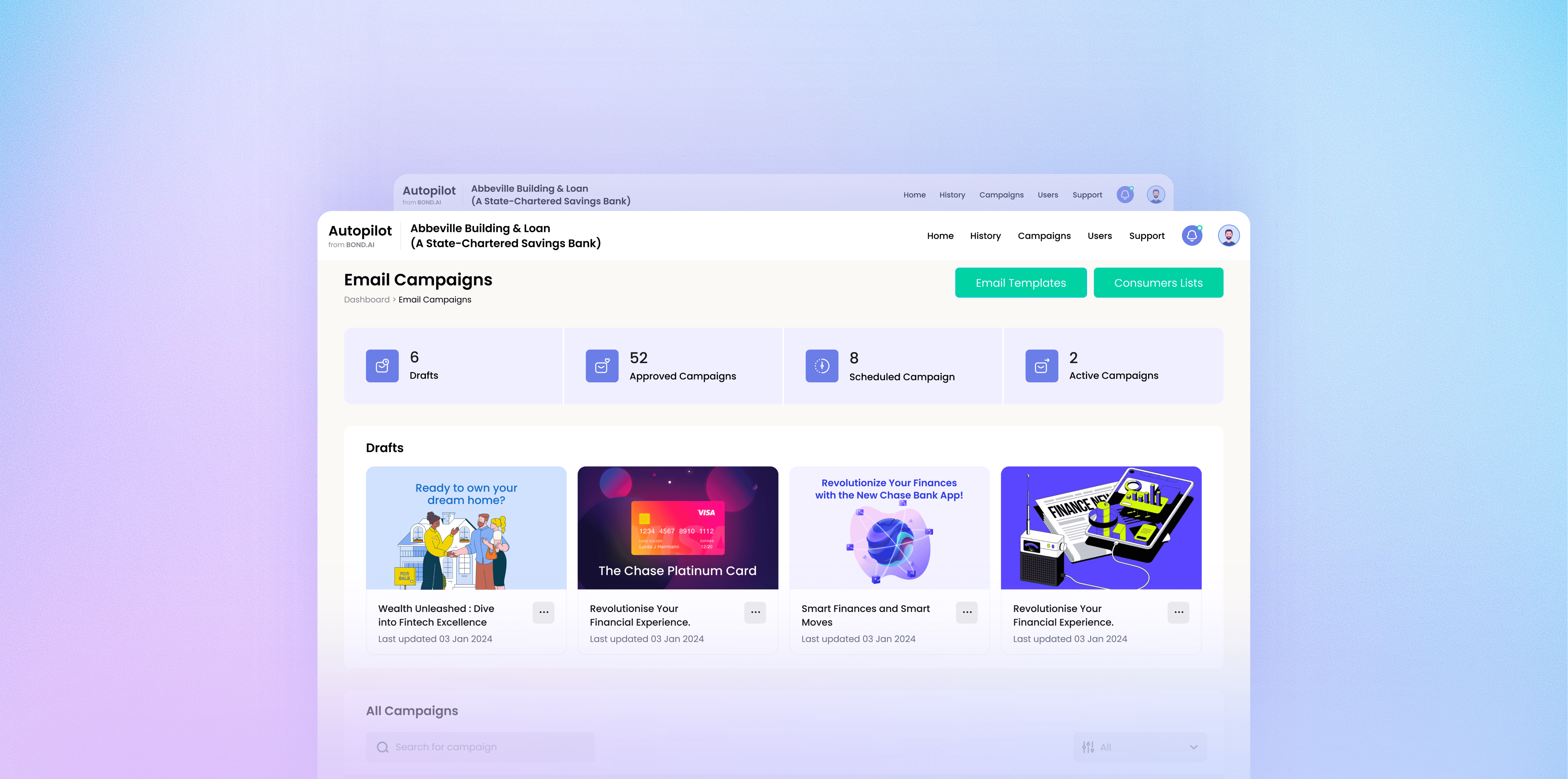
We built a connected flow that lets teams move from insight to execution in one place exploring segments, curating lists, and creating campaigns without losing context.
A guided builder, reusable templates, and real-time performance metrics made setup faster and outcomes clearer, giving users confidence before every launch.
Review steps and built-in governance kept the process reliable, while a simplified hierarchy reduced friction across roles. The result is a workflow that feels intuitive, measurable, and grounded in how banking teams already think and act.
Collaborated with product, marketing, and data teams to define a unified campaign journey.
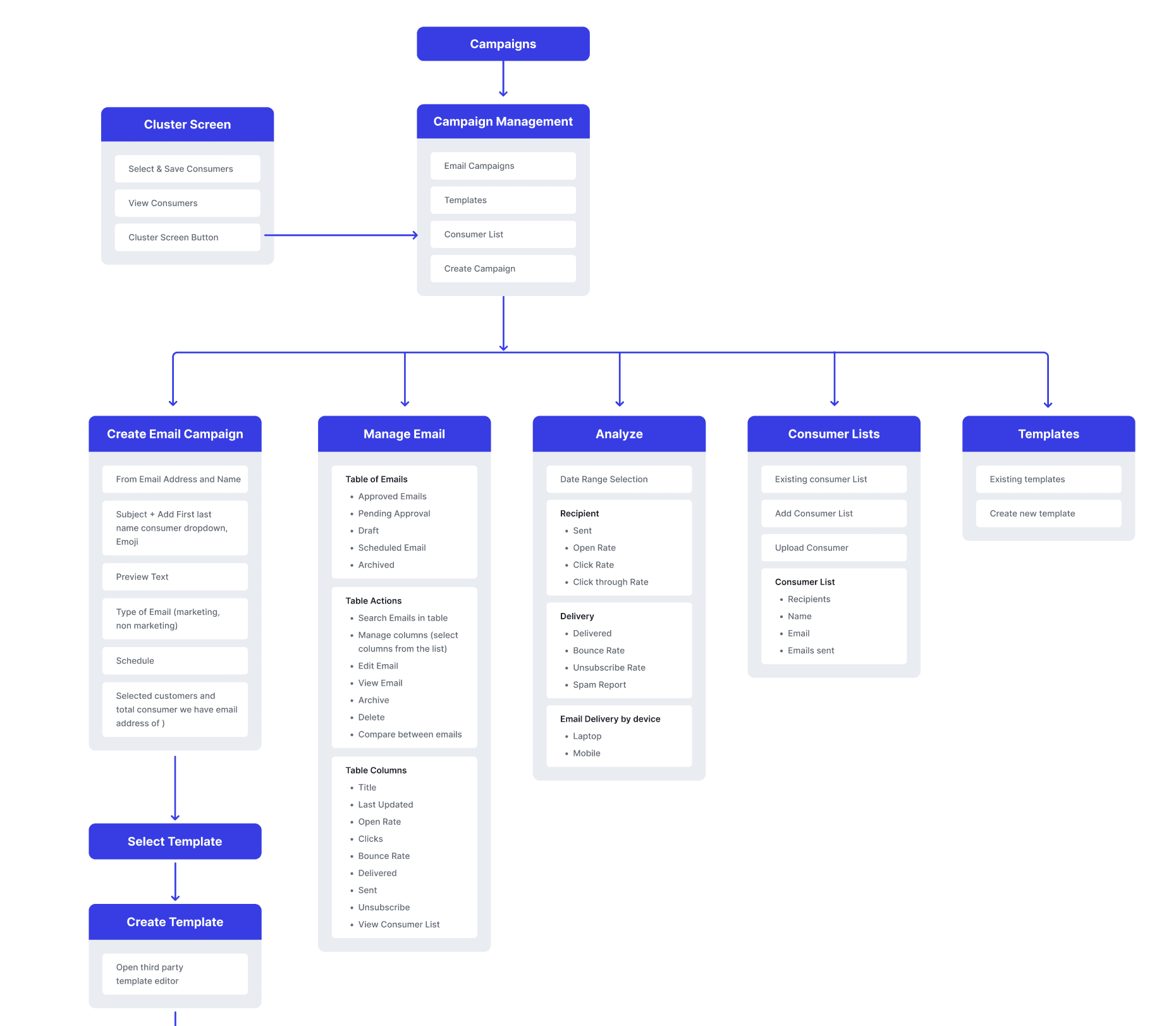
Mapped backend data flows connecting clusters → campaigns → performance tracking.
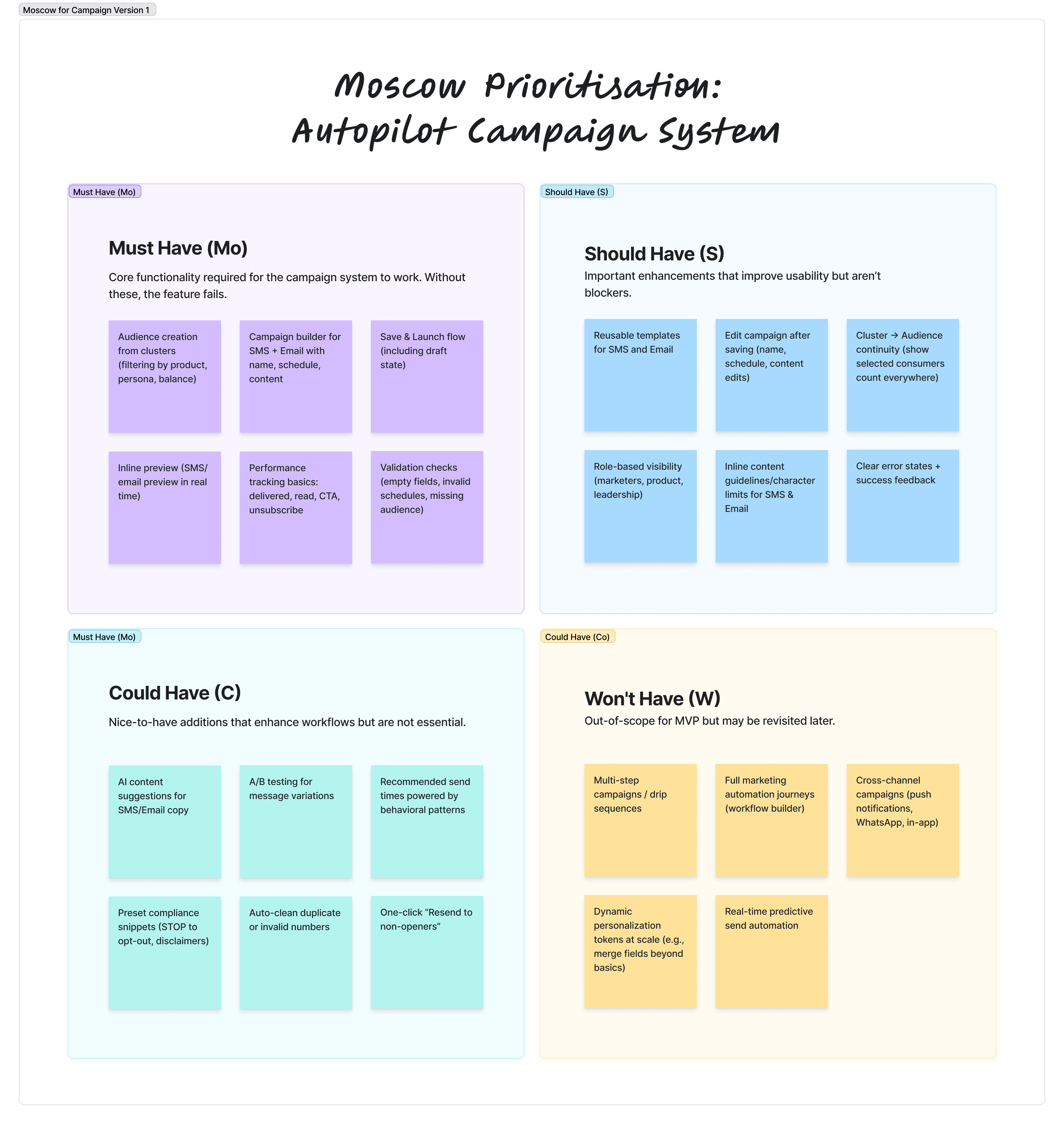
Applied MoSCoW prioritization to define MVP and automation enhancements for later phases.
Built high-fidelity prototypes in Figma and validated through stakeholder and pilot testing.
Measured iteration success through time-to-launch and user confidence metrics.
Define
I reviewed support tickets and pilot feedback to understand why campaigns stalled. The issues were consistent — delayed launches, scattered tools, and confusion around targeting. Teams could spot an opportunity but couldn’t act on it directly, often relying on back-and-forth with marketing. It became clear that Autopilot’s value couldn’t end at insight discovery; it needed to help teams act. That insight shaped the foundation for a native campaign flow.
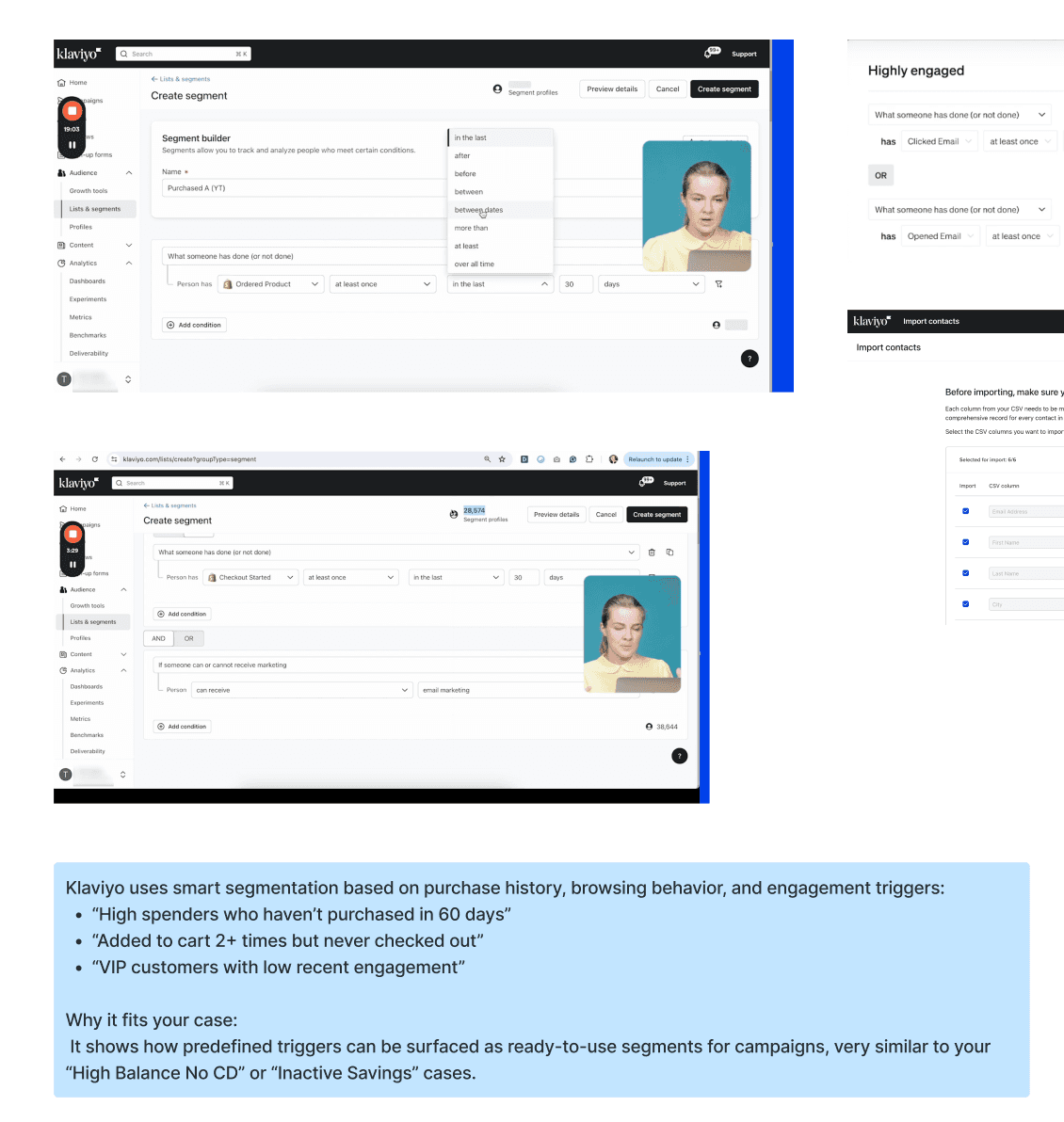
After V1, we proved banks could spot meaningful opportunities but acting on them was slow. To understand what “fast and familiar” should look like, I studied tools like Klaviyo, HubSpot, and Mailchimp, where segmentation and campaign setup feel effortless and transparent.
We brought those principles into Autopilot with guided steps, real-time previews, and CRM-style feedback layered over banking intelligence. By blending trusted CRM patterns with Autopilot’s data engine, teams could move from identifying an opportunity to launching a campaign in minutes.
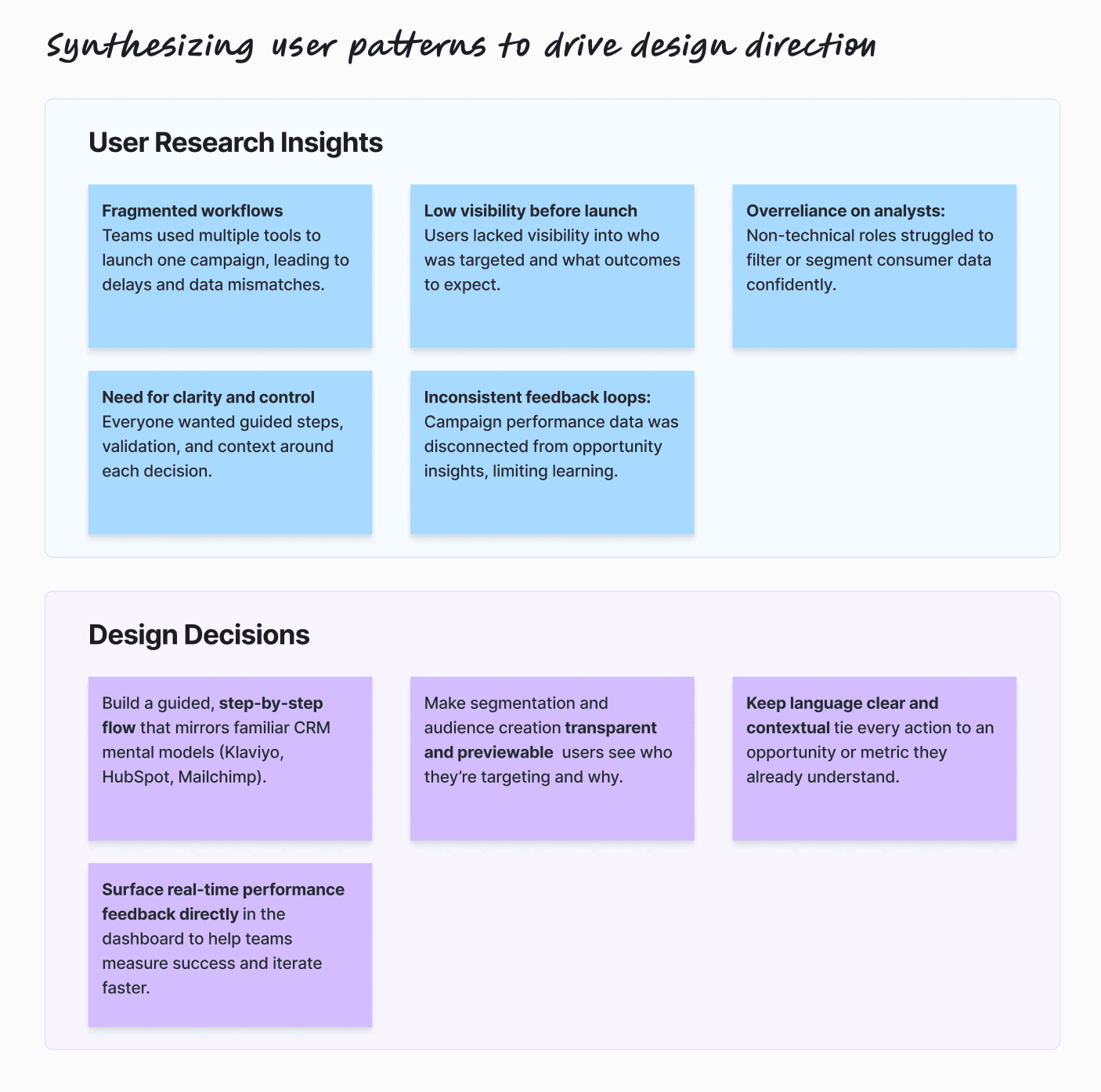
Building on V1, we spoke with relationship managers, marketing strategists, and product owners to understand what makes a campaign workflow feel intuitive and trustworthy. Three needs surfaced quickly: a guided flow without tool-hopping, clear visibility into who’s being targeted and why, and real-time feedback to close the loop after launch.
Three needs surfaced quickly: a guided flow without tool-hopping, clear visibility into who’s being targeted and why, and real-time feedback to close the loop after launch.
From this, we shaped our core heuristics — clarity over complexity, transparency for confidence, progressive control, and CRM-familiar patterns that reduce friction. These principles steered every iteration and kept the experience simple, scalable, and human.
The campaign flow was crafted to feel like a natural extension of the insight journey — not a separate tool. From the opportunities screen, users could filter real consumer data, curate the right audience, and understand exactly who they were targeting and why it mattered. This ensured that action always began with clarity and live context.
Once an audience was set, the guided campaign builder took over. Users could preview messages, schedule delivery, and validate details in one place. The review screen closed the loop with quick edits, testing, and iteration — helping teams improve quality and move from idea to execution without leaving the workflow.
Develop
Designing the Flow
We focused on one goal: make campaigns feel like a natural extension of the insight journey. Instead of sending users to external tools, we stitched the entire workflow inside Autopilot — from identifying an opportunity to delivering a message. The design mapped how teams actually work: explore clusters, refine the audience, launch the campaign, then measure what happened. Each step builds confidence and reduces the mental leaps users normally make across tools.
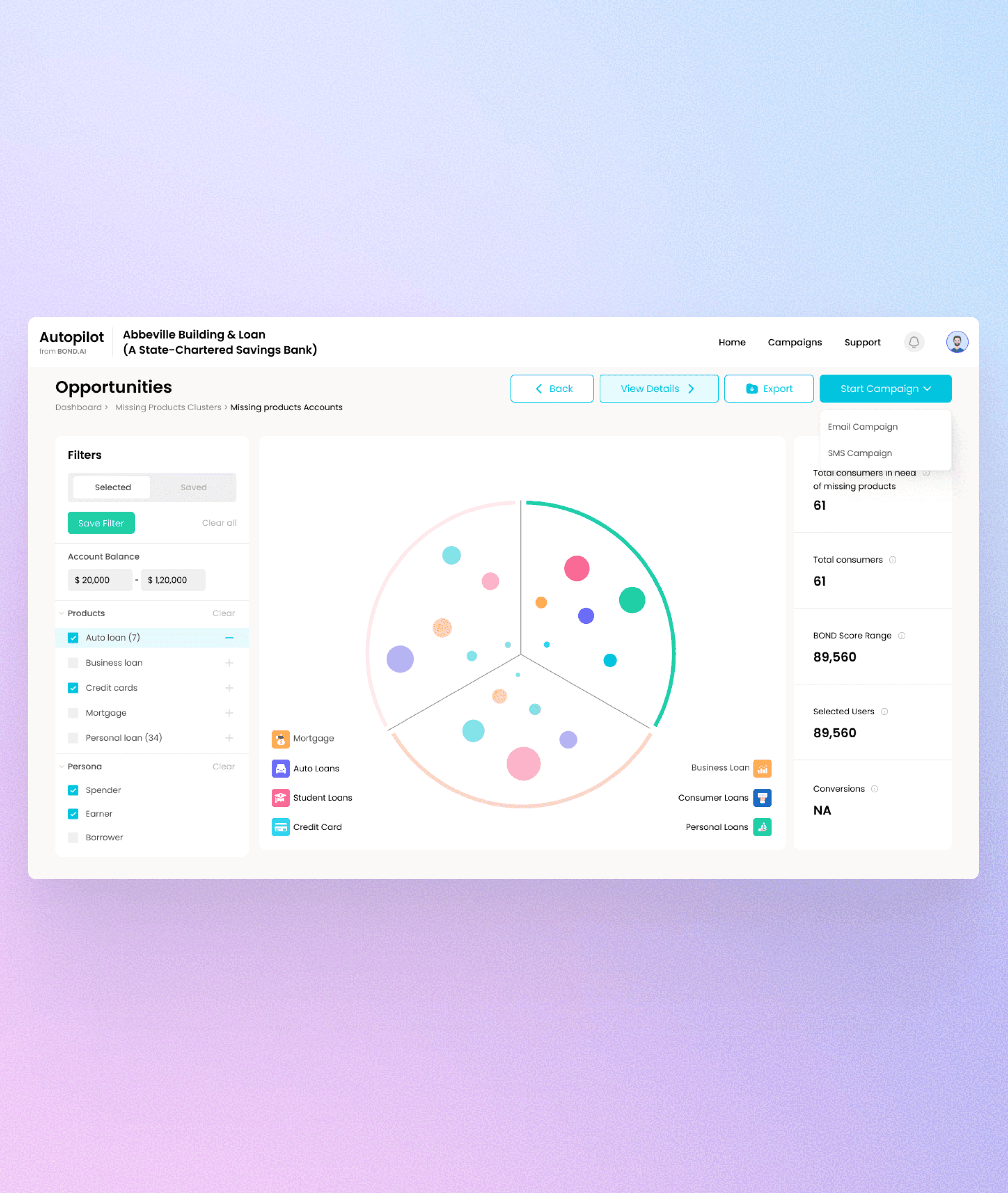
The first phase centered on helping users form the right consumer list. The cluster screen acts as a visual filter — product affinities, personas, balances, and data signals surface in a way that feels familiar but more intuitive than traditional CRMs.
We used heuristics like progressive disclosure and recognition over recall so users could adjust filters without losing context. The system always shows who they’re targeting and why, creating clarity before they even think about messaging.
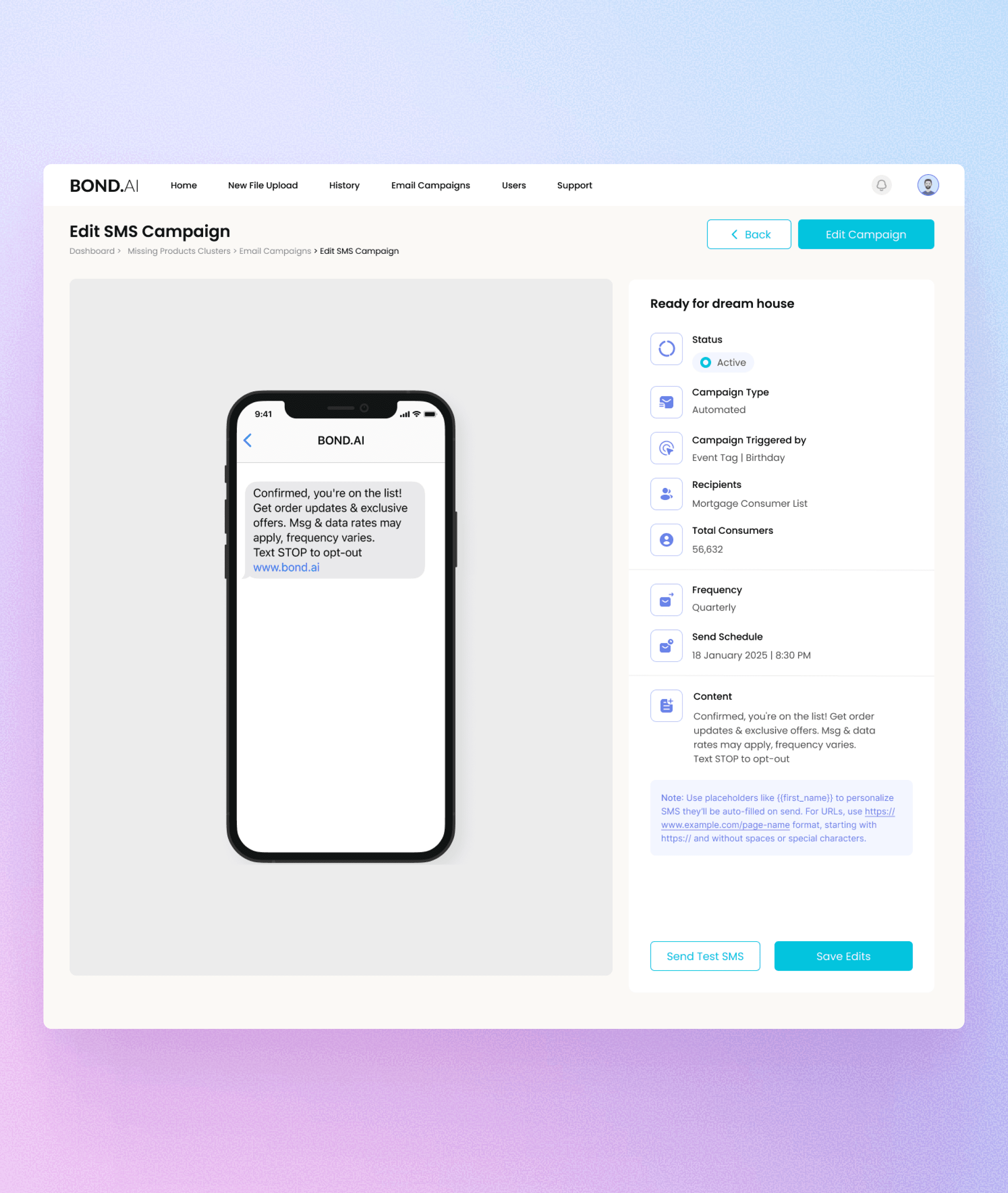
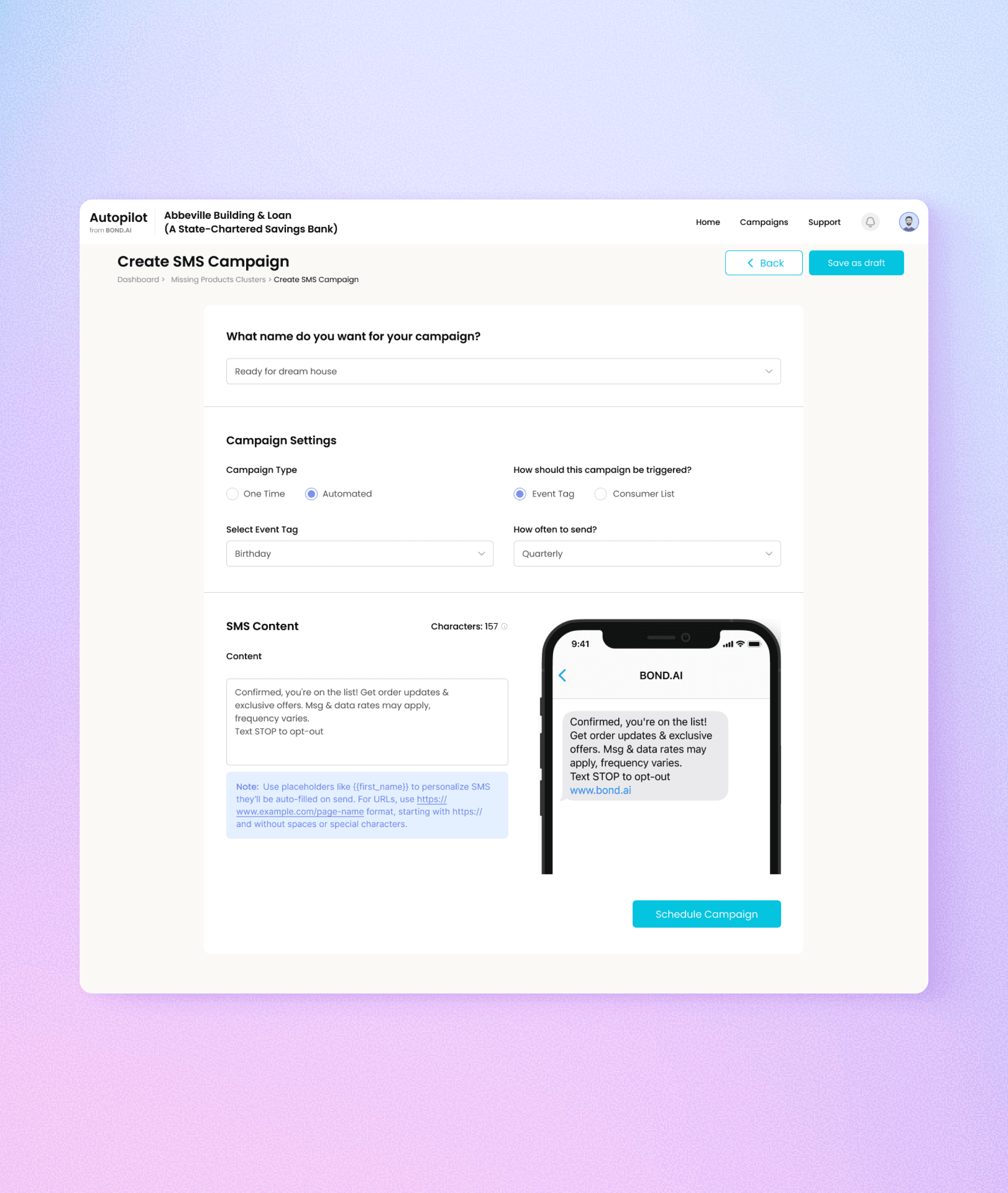
Once the audience is locked, the guided builder steps in. Every field is designed to answer a simple question: what do I need to feel confident sending this? Clear labels, live previews, inline SMS mocks, and scheduling tools reduce hesitation.
We leaned heavily on visibility of system status, error prevention, and natural mapping, so users always see their character count, audience size, and next step without hunting for it. The result is an experience that feels calm, predictable, and fast.
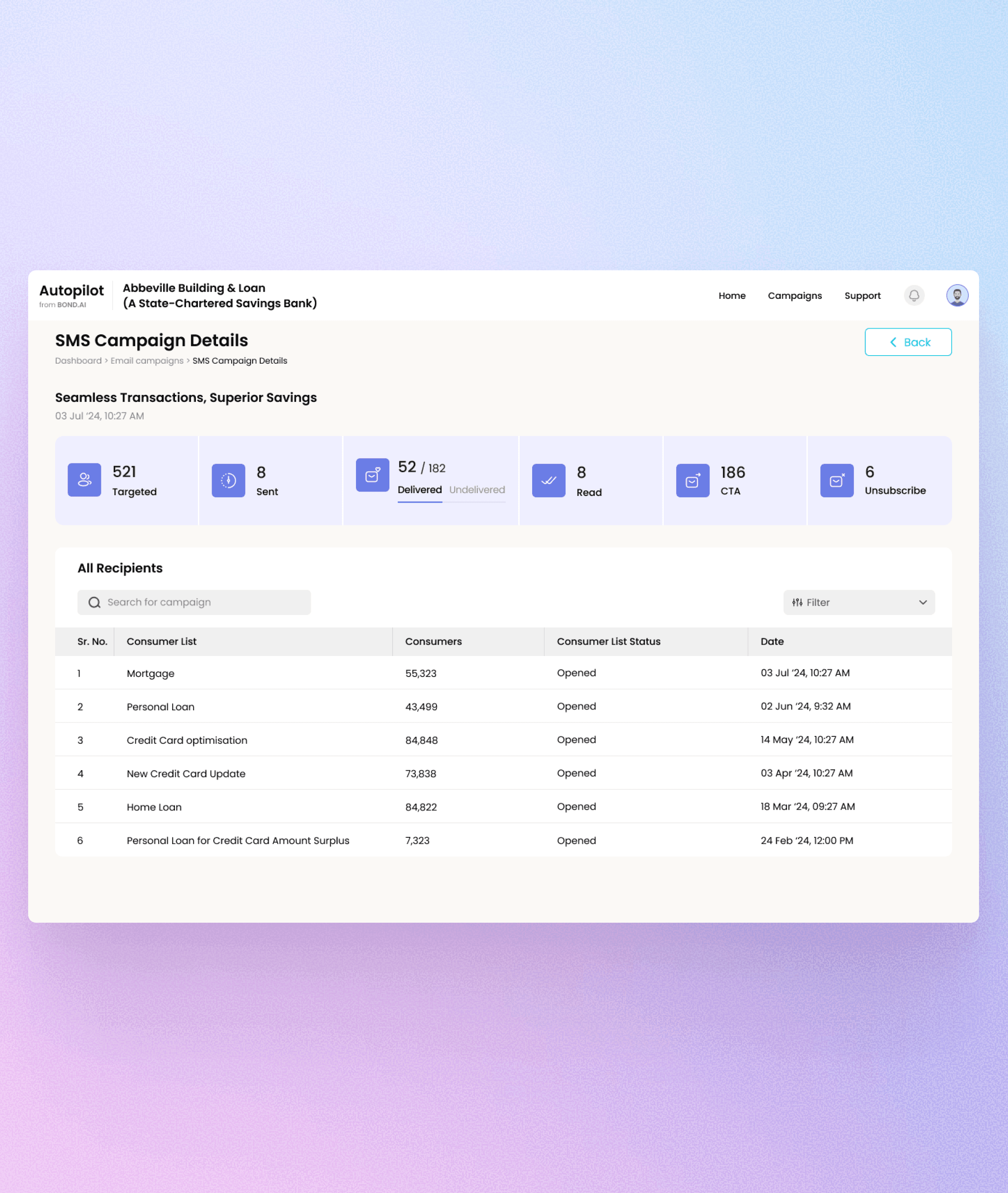
After launch, users land in a performance view that turns raw metrics into meaning. Delivered vs undelivered, CTA lifts, read rates all surfaced through clean visual hierarchy and contrast-driven cues.
By organizing data into simple cycles, the screen helps teams track improvements without spreadsheets or manual follow-ups. The loop becomes continuous: see the result, refine the audience, and strengthen the next campaign.
Deliver
Results That Spoke for Themselves
Enabled teams to move from opportunity → campaign in minutes, not days
Reduced dependency on analysts by making targeting and setup self-serve
Improved accuracy of consumer lists through clearer segmentation and previews
Increased confidence and consistency in campaign quality with guided steps
Stronger cross-functional collaboration connecting insight, action, and measurement.
Winning Moments
Unified data, marketing, and strategy under one connected flow
Designed a CRM-like experience within a banking intelligence product
Lessons Learned
Clarity outperforms complexity — users act faster when the path is obvious
Familiar CRM patterns reduce learning friction and build trust quickly
Transparent cues (audience size, preview, delivery status) drive adoption
Good UX doesn’t just enable action — it improves decision-making behavior