Turning Banking Data into Clear Decisions
Autopilot is a banking intelligence platform designed to help financial teams make smarter growth decisions using their own data without needing analysts, exports, or guesswork.
This case study shows how I built an insight-first decision system for banks that previously relied on instinct and spreadsheets. We transformed scattered financial signals into a clear, trusted framework that helps teams see what matters, understand why it matters, and act with confidence all in one place.
The result: decisions grounded in clarity, not chaos.
How I moved the work forward
Lead UX Designer | Platform: Enterprise Web | Domain: Banking & Analytics
My scope included
Product managers to define scope and priorities
Discover
Data Without Direction
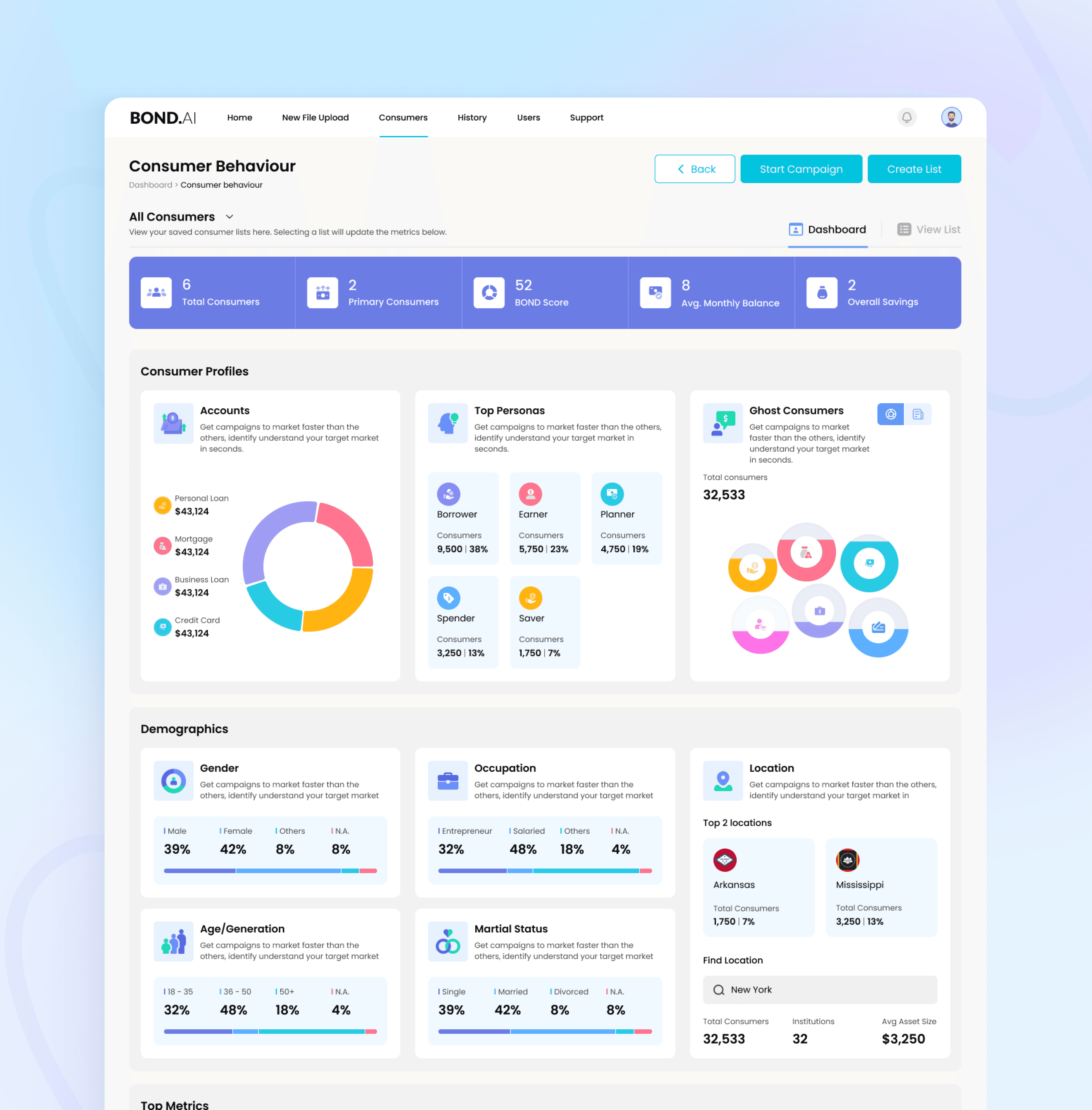
Every bank had the same problem too much data, not enough insight. Most teams didn’t have analysts to turn raw signals (like product affinity, missed revenue, or financial health) into meaningful action.
Decisions depended on downloading CSVs, comparing columns, and hoping nothing slipped through.It slowed campaigns, caused handoff delays, and made growth strategy more guesswork than guidance.
Our goal was to transform raw financial signals into contextual, actionable opportunities that
Data Without Direction
We built an insight-first experience one that connects opportunity discovery directly to action.
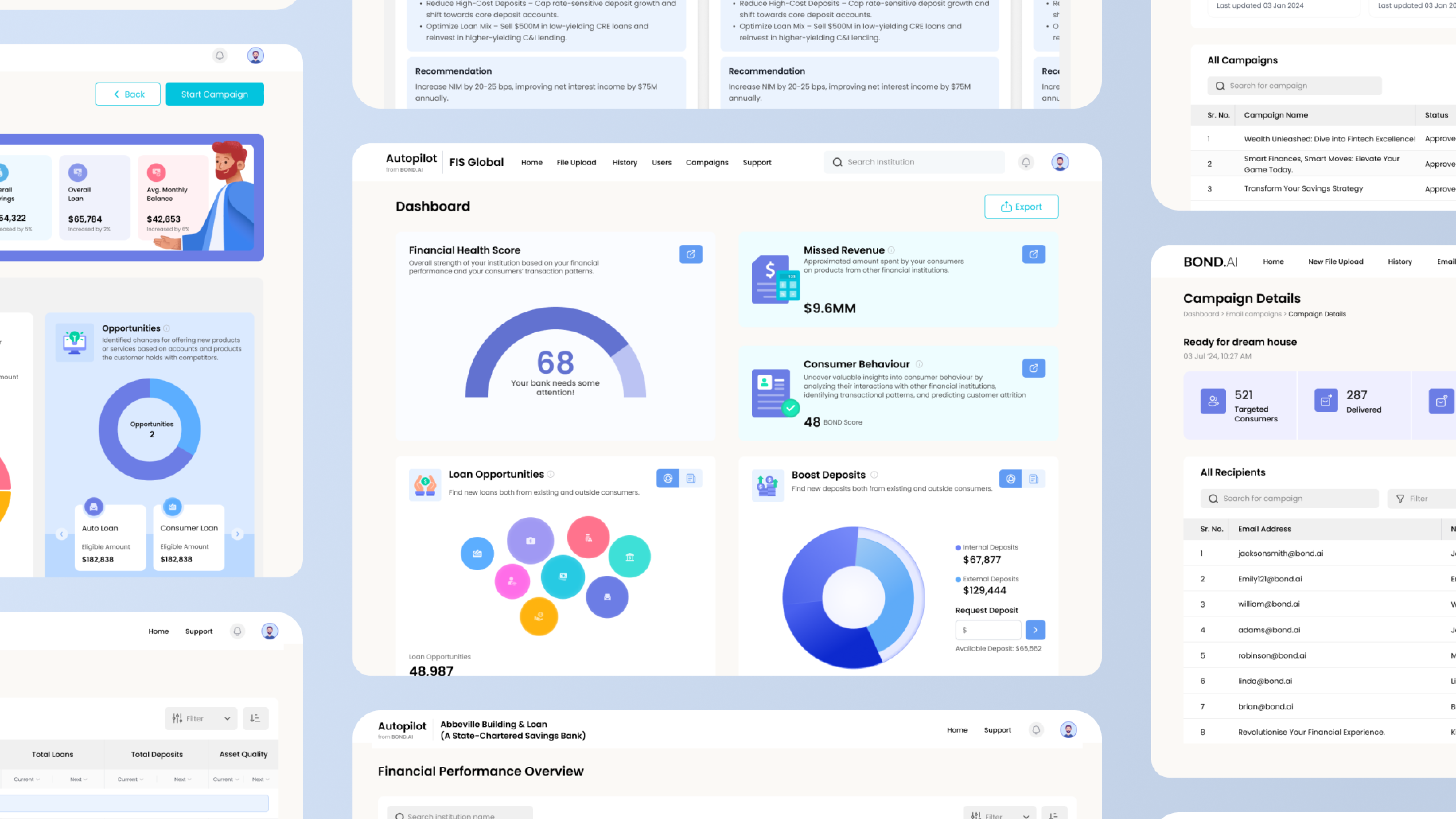
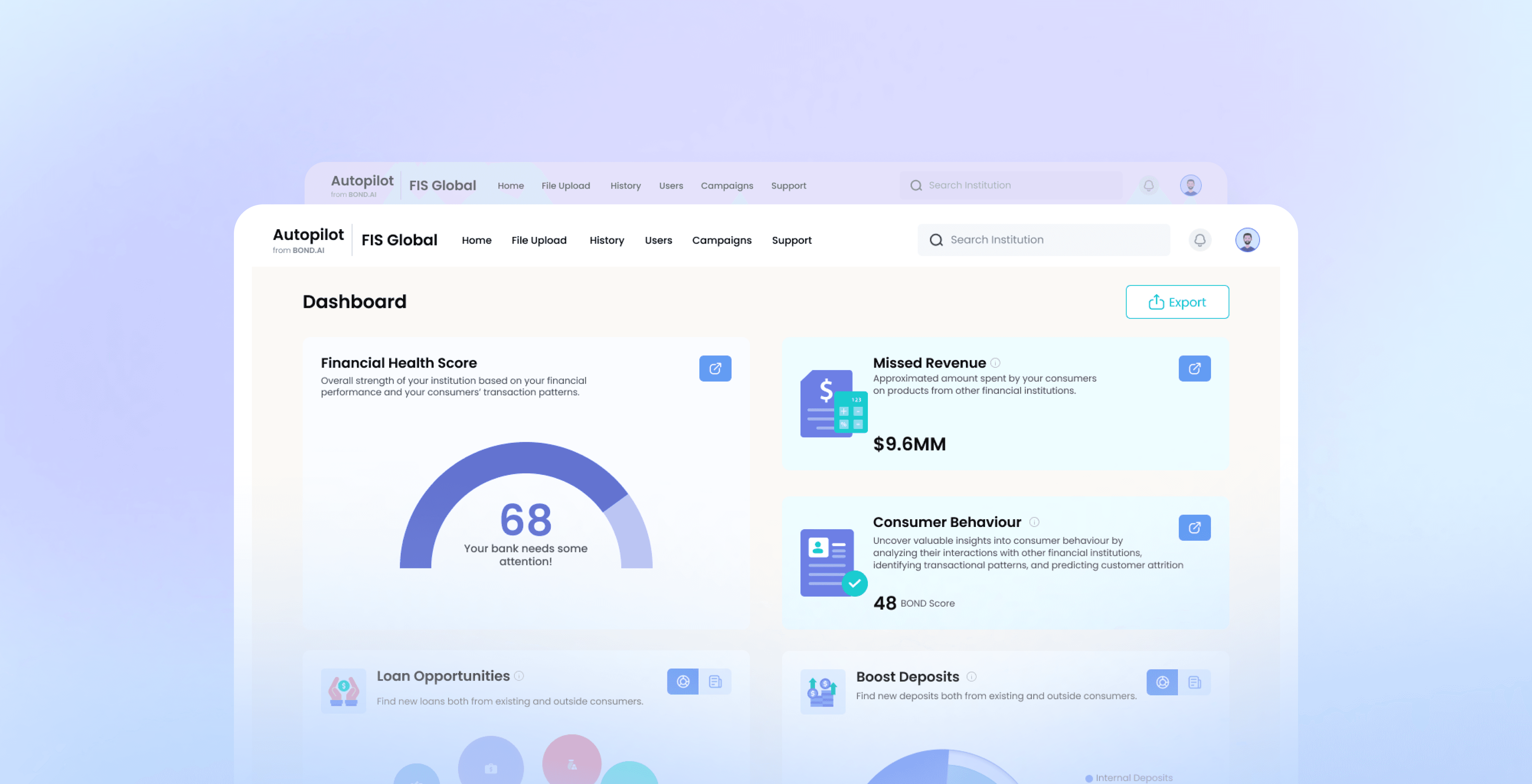
Instead of overwhelming users with endless tables, the dashboard surfaces prioritized opportunities, explains the logic behind each, and provides the next best step.
Every detail was designed for clarity first, complexity later. Through progressive disclosure, confidence indicators, and role-based summaries, we gave teams a way to see, trust, and act all in one place.
Conducted stakeholder + SME interviews to uncover core pain points
Collaborated with data science to map data-to-UI workflows
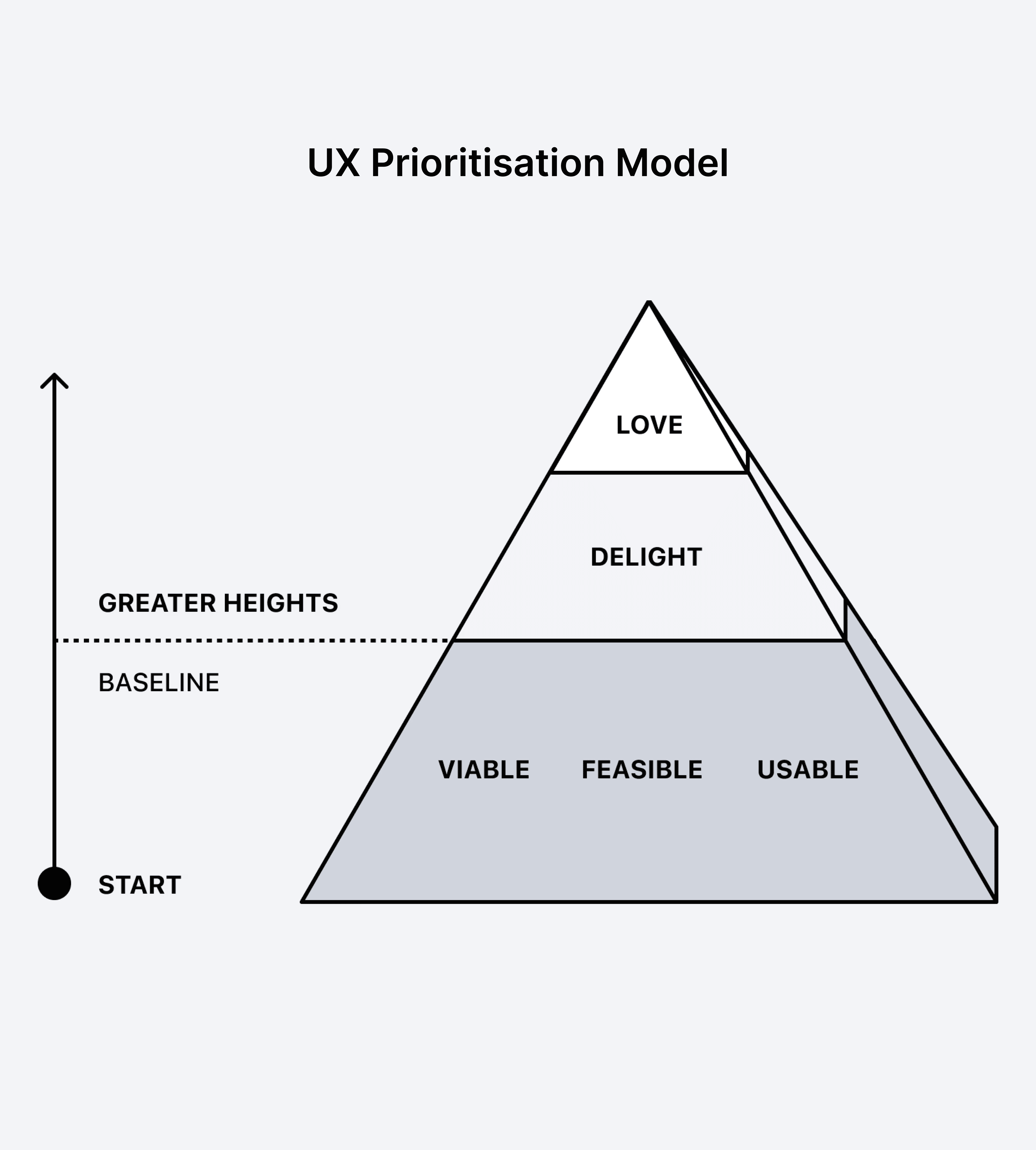
Used MoSCoW prioritization to deliver high-value MVP features fast
Built rapid prototypes in Figma + AI-assisted testing tools
Ran pilot cycles to refine clarity, feedback loops, and adoption
Define
To understand real pain points, I analyzed customer service and sales tickets. Recurring themes emerged: confusing reports, analyst dependency, and slow identification of growth opportunities. The insight was clear — users didn’t need more data. They needed direction. This finding validated our shift to an insight-first MVP.
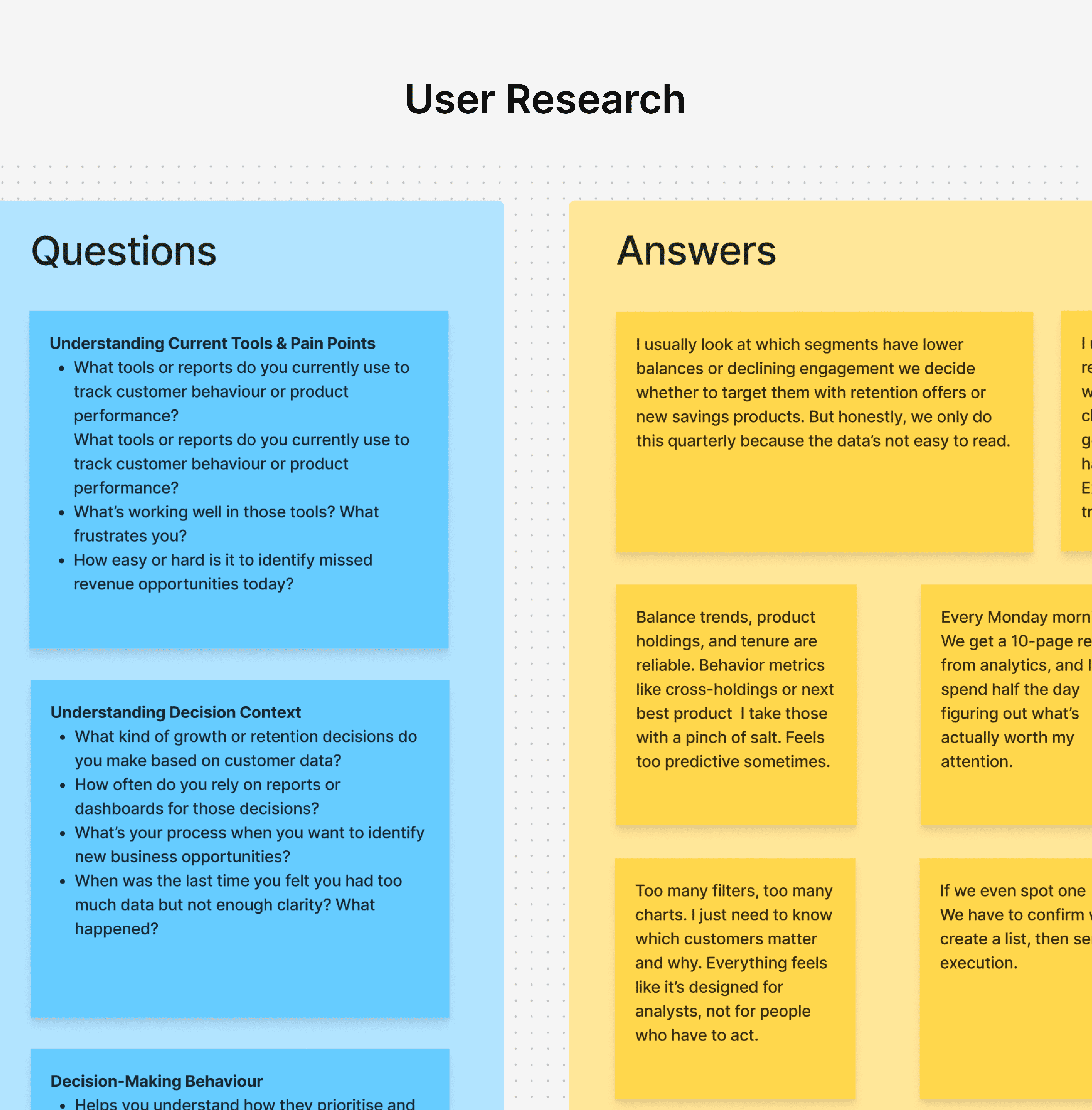
The research revealed recurring friction points:
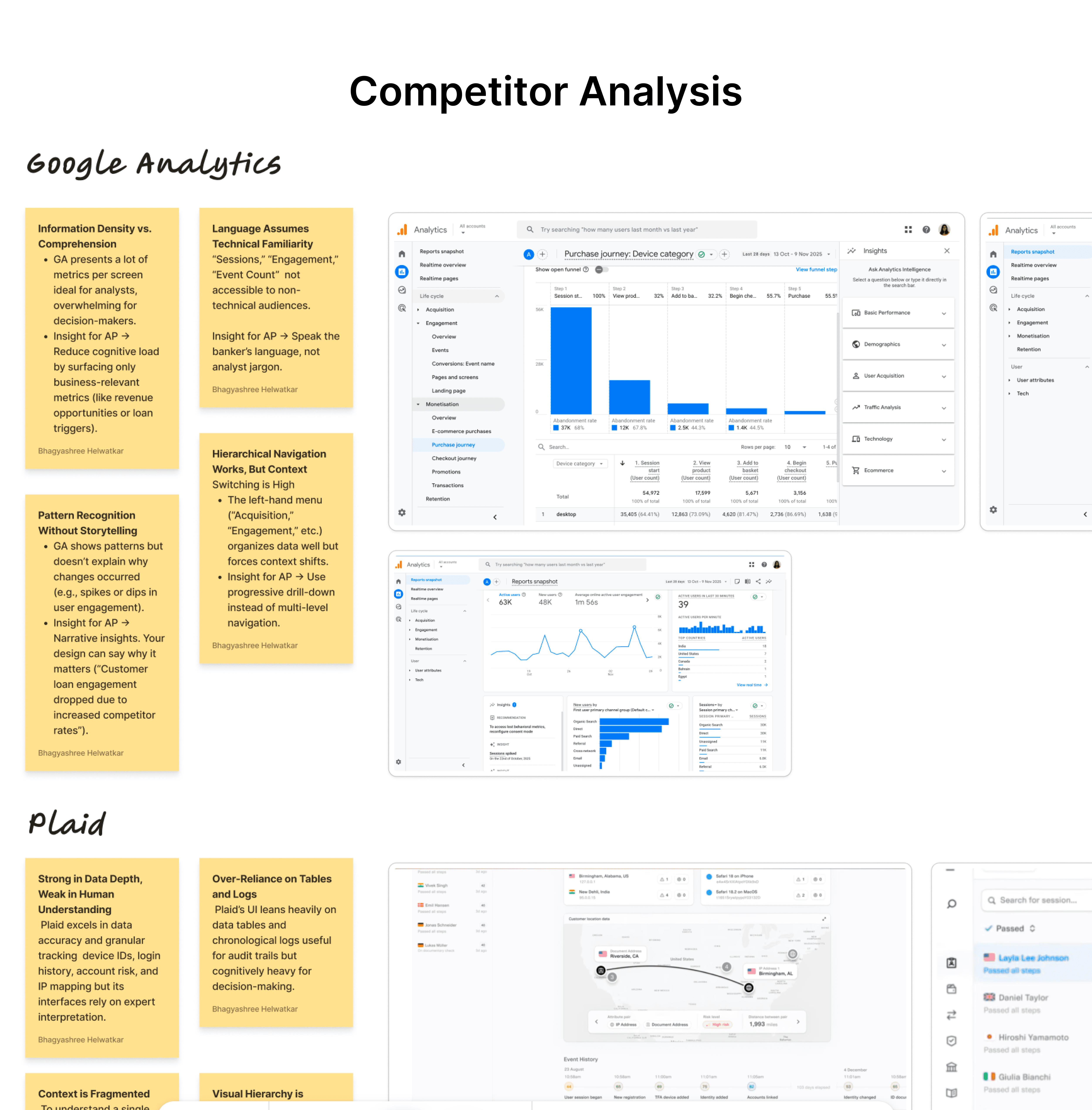
I benchmarked complex tools like Google Analytics, Plaid, and internal competitor dashboards. Most presented data-heavy, technical screens that required specialized training.
We saw a clear opportunity to make data actionable, conversational, and self-explanatory for non-analysts.
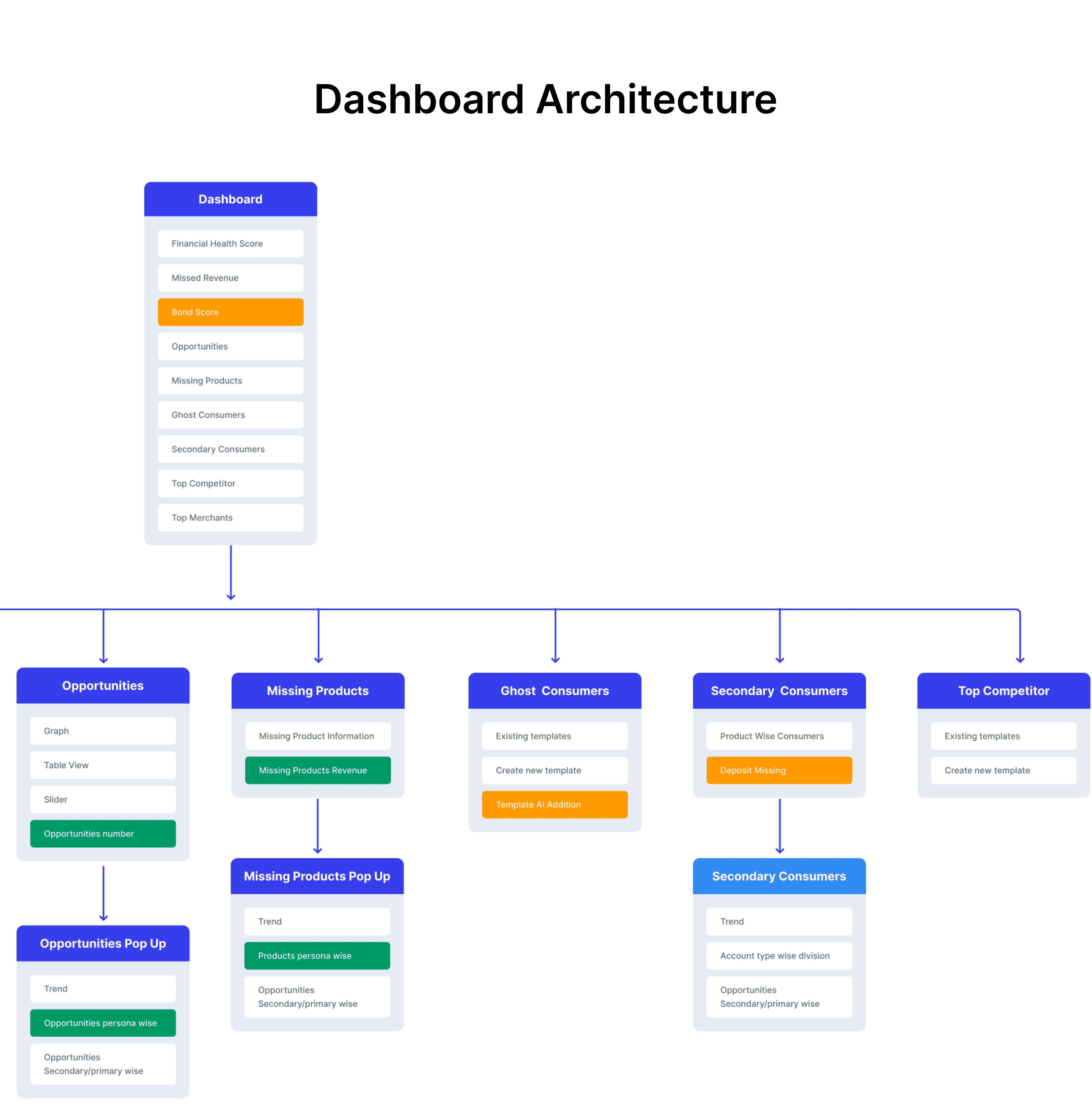
To translate insights into structure, I mapped how data and decisions connect across the dashboard. The architecture outlines what to build first and what to scale later ensuring clarity for both users and the team.
Purple marks MVP 1 (page-level information), Green highlights insight opportunities, and Yellow represents MVP 2+ features planned for expansion.
This helped prioritize design sprints and align cross-functional teams on a shared vision. It also became a visual guide for how user insights evolved into product features.
Develop
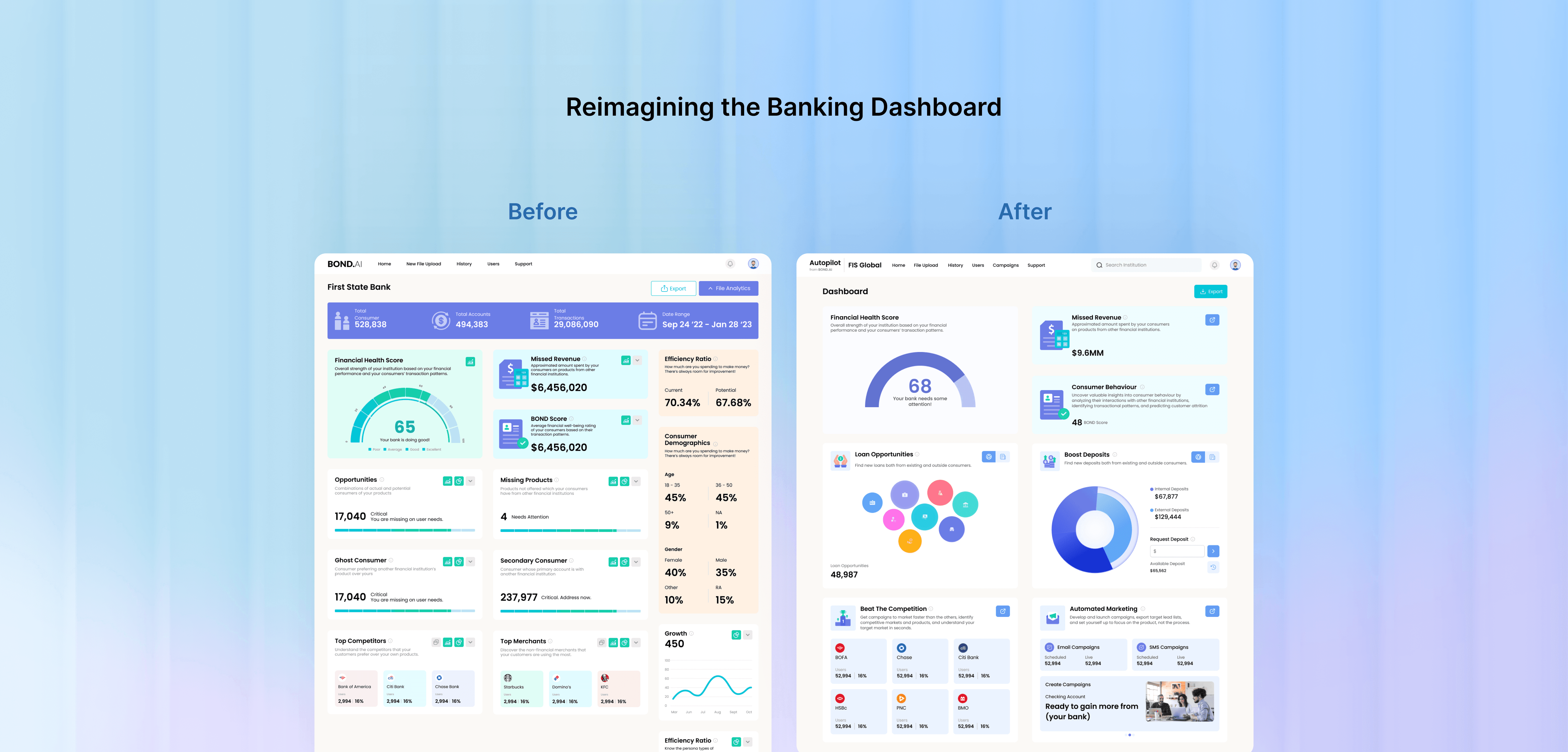
Here’s the thing: the first Autopilot dashboard proved a simple truth — putting every signal in one place helps, but it doesn’t make humans understand it. Users still stared at numbers. They needed intent, not more widgets. So I led a redesign that treated clarity as the product requirement, not a styling pass.
Research → principles → focused prototypes → validate with real users → ship the smallest thing that changes behaviour.
Principles for Redesign
Keep the surface clean. show only what a user needs right now and let deeper insight unfold on demand. Practically: role-based defaults, compact preview cards, slide-up detail layers and inline drill-ins so beginners get clarity and power users get control.
Plain-Language Copy
Swap banking gobbledygook for action-first language that answers “what do I do next?” Example: replace “Customer segmentation by propensity score” with “Who’s ready to buy next?” Copy that helps decide, not impress.
Design modules that do the heavy lifting: clear status chips, priority badges, and focused color cues that call out what matters first. Each card contains the signal, the action, and the confidence — preview size, expected impact, and quick next steps — so decisions are obvious.
How it flowed together
We turned a noisy dashboard into a decision-first surface: the top layer gives immediate signals and recommended actions; tap to expand for context, preview audience size and prediction confidence, then one-click to create or test.
That sequence — see → understand → act — is now the UI heartbeat.
Outcome (What actually changed)
Clearer priorities: Visual hierarchy and modular grouping made it obvious what required attention now versus what could wait.
Lower cognitive load: Progressive disclosure and simplified language reduced overwhelm, helping users move from observation to action with confidence.
Higher action quality: By surfacing the right signals at the right moment, teams made more consistent, data-backed decisions across roles.
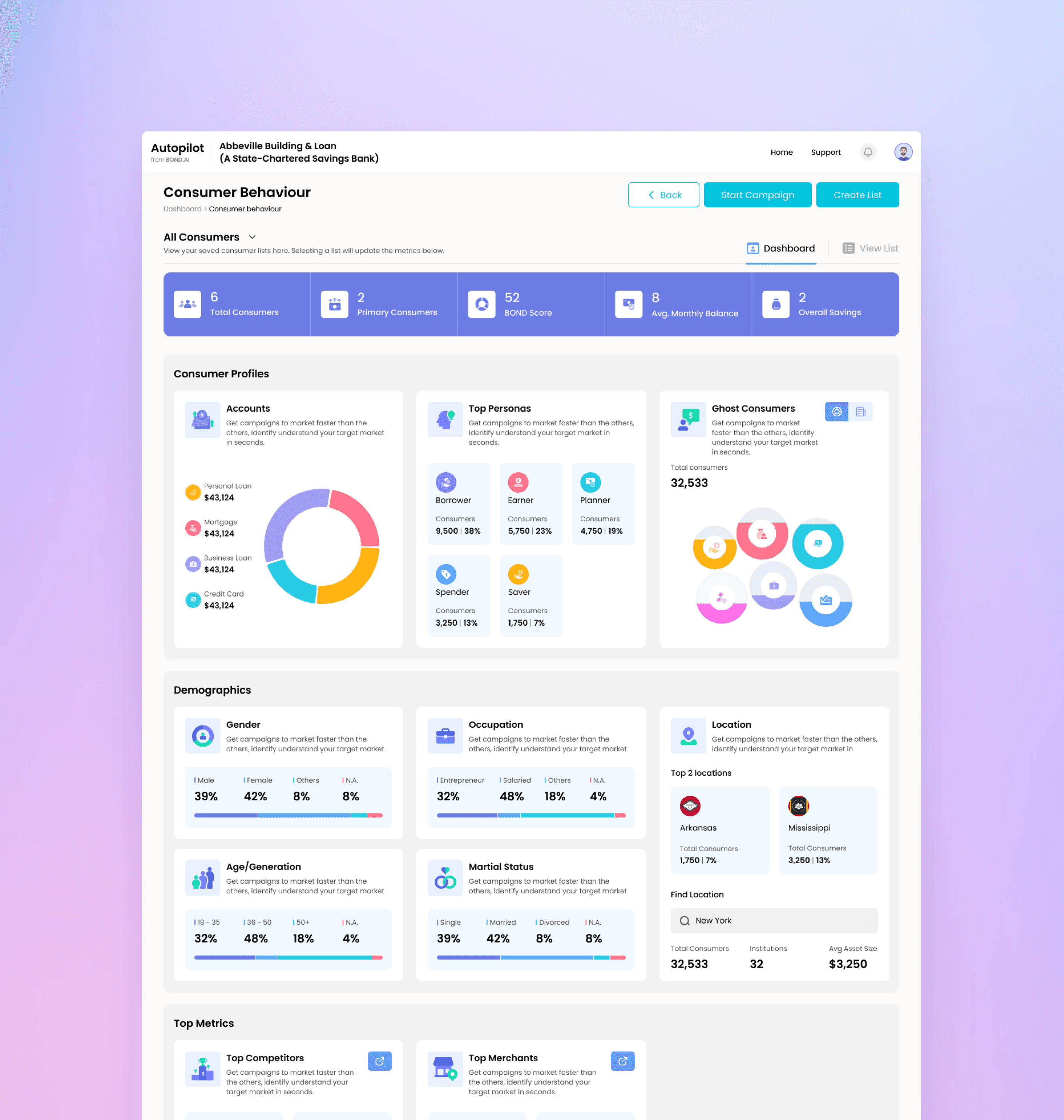
Once the new dashboard establishes clarity, every core signal becomes a doorway.
Clicking into key modules takes teams straight from awareness to execution.
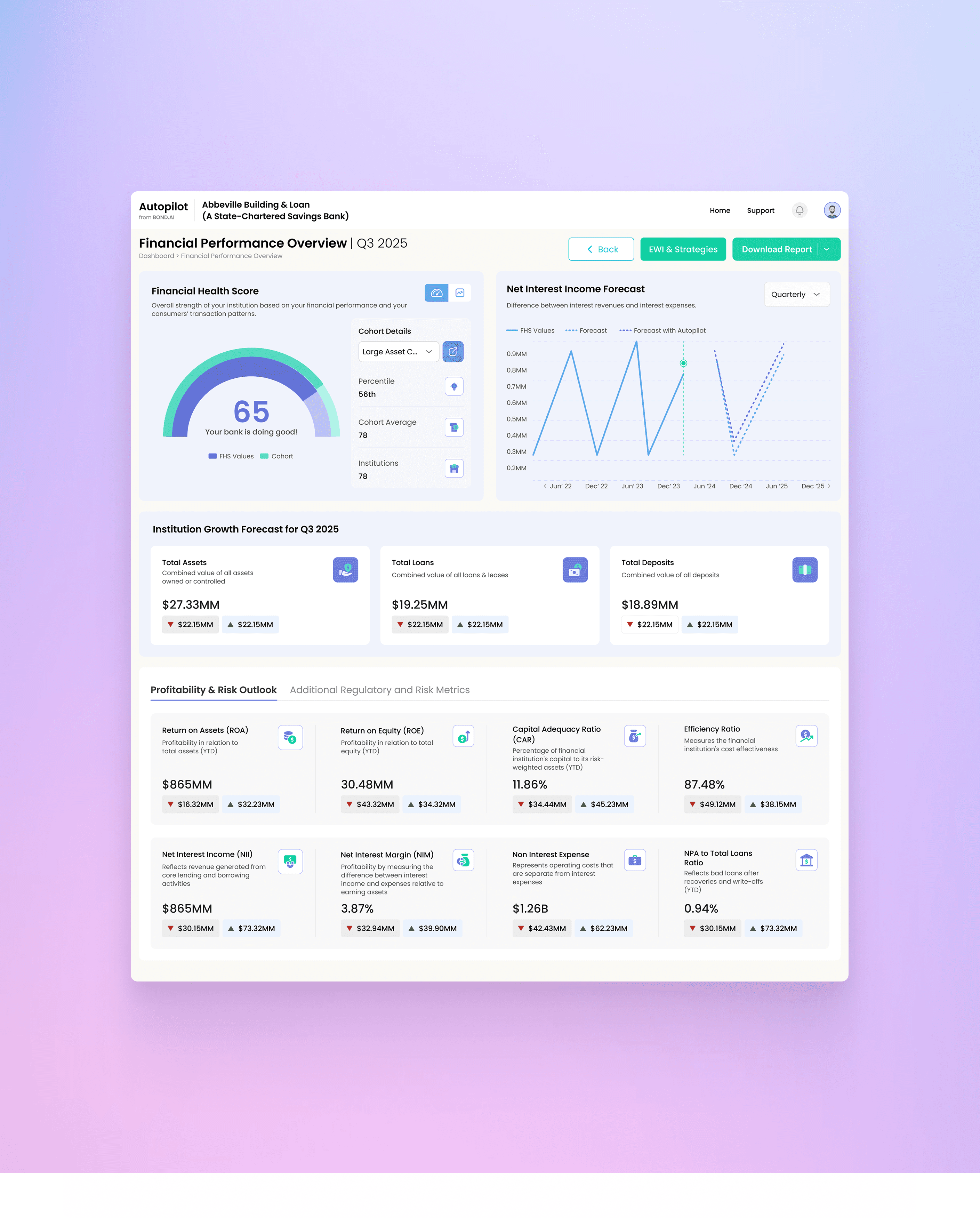
The Financial Performance view expands the headline score into a full strategic lens.
Leaders see how the bank is performing today, what’s changing beneath the surface, and where growth and risk are trending with forecasting that turns quarterly planning from guesswork into grounded decision-making.
Deliver
Data Without Direction
40–60% faster comprehension time per opportunity
50%+ increase in meaningful drill-downs (less Excel dependency)
70%+ of pilot users could explain why an opportunity mattered
~80% adoption across relationship and marketing teams
30–40% fewer data validation escalations due to confidence indicators
Winning Moments
Established a shared design–data–engineering framework
Validated the “clarity over complexity” approach with pilot teams
Lessons Learned
Trust drives adoption more than innovation alone
Simplifying context can have more business impact than adding new data